Showing posts with label Hearing Aid Virginia. Show all posts

Friday, 20 April 2018

How Evolution Hearing helps you to get the best result in recovering your listening ability?

In many cases, people lose the perfect ability to hear in the old age. You may also get damaged hearing ability in an accident, or it may be an inborn problem. The expert medical professionals may suggest you to get the hearing aids to solve the problem. And you should rely on the best hearing aid in this case. In the modern days, you will get numerous options available for Hearing Aids North Carolina, but you need to find the best in the market. There are few benefits that you can get from the company like Evolution Hearing that can help you to get the best quality Hearing Aids

Benefits of Evolution Hearing

If you are losing your hearing ability, then you may lose your confidence too. A good hearing kit can bring you back the lost confidence and the hearing ability at the same time in this case. So, you need to trust on the reputed company which serves a good amount of sufferers and gives them a quality life. The quality of the service of Evolution Hearing can make you impressed. This company deals with different hearing aids that are modern and gives you the natural feeling. The expert guides of the company also help you to select the best solution according to your budget and problem. In the modern days, the companies are also becoming rich in their collection of hearing aids to meet the expectations of the clients. But all of these companies may not serve you the quality products. In this case, you can trust on the efficient services of the Evolution Hearing which has already earned a good reputation in the market. The expert doctors of this company cam diagnose your problem and suggest you the best way.

Content Source

Tuesday, 19 December 2017

Hearing Issues and Festivals | Hearing Aids, ALDs and Audiologists

It is said that till we do not experience something, it is hard for us to understand what that person is going through. The people with the hearing impairment are the ones who are misunderstood the most. If a person is having eyesight impairment, one can make out easily with the help of shades and stick but hearing impaired people have to constantly remind other people that they are having the hearing issue.

Audiologists North Carolina

So, here are some of the suggestions by the best audiologists in Virginia:

  • Hearing and Thanksgiving: The thanksgiving is all about pumpkins, get-together and having fun. Your hearing issue could hamper the mood of festivity and you may not be able to enjoy it to the most.
      1. So, make sure that you wear your hearing aids or ALDs suggested by your audiologists. This will help you drive your vehicle and changes in the schedule of bus or train.
      2. Also, do not forget to carry the extra set of chargers and batteries and other hearing aid accessories that will allow you to use your hearing aid in any location.
  • Weather: Thanksgiving means snow and snow mean precipitation reducing the efficiency of hearing aids and also resulting in Tinnitus. Protect your hearing aids from the getting damaged and protecting your ears from strong winds – both are necessary. Thus, anchor it properly. Hearing aid dehumidifiers extract moisture that may build up from your hearing aids throughout the day as a result of rain or sleet.
  • Social Gathering: The social gathering could be difficult as people tend to spend so much time at each other’s house which includes lots of conversation. It could be difficult to put up with the conversation because of multiple people talking all at once. Do not hesitate to ask people to repeat themselves if you couldn’t hear what they said the first time, and wear your hearing aids normally to make it easier to communicate.
So, make sure to consult your audiologist in Virginia and get few useful tips from them. They will give you some tricks to avoid any kind of confusions and mishaps.

Wednesday, 13 December 2017

How To Cope up with Hearing Loss? Feelings, Hearing Aids, and Audiologists

Forming any kind of disability could break your morale to some point, no matter how strong you are. It could shake your confidence to the point where you slip into depression. However, you are not the only one who is overwhelmed by the emotions, there are many. Some even after consulting an audiologist and taking help of hearing aids couldn’t cope up with their hearing loss.


Well, you need not panic at all because there is no problem in the world that does not have solution. Some solution needs patience and some are quick. So here are certain tips to cope up with the hearing loss:
  1. Explain yourself and your requirements: When you become part of a hearing issue, your problems and solution could be different than others. Sit with your friends and family and people who you deal with, on daily basis your arrangements and solutions. Explain to them how you want to converse and how can they help. It takes patience to deal with any kind impairment but keep faith to get through.


  1. Do not hide your feelings: no matter how irritating or bothering it is, be open to hearing impairment. Do not isolate yourself as it could lead to depression. One cannot get used to hearing loss overnight; it requires support, patience and maturity. If you are the one dealing with a person with hearing loss, have patience and be calm.


  1. Research: When you learn more and more about hearing loss, you will feel better. Your anxiety will reduce. Reach out to people who have suffered this loss or contact the support group, take help of therapist and audiologist. They could help you with treatment options, medical checkups, and best pair of hearing aids available for you, etc.


  1. Have realistic expectation: You hearing issue could be different than the one you have in your support group. Do not compare your problem with other, nor compare the recovery. You will recover and heal in your own sweet time. However, be realistic about your expectations with the cure and healing. This will help you to move one of the panic and anxiety.
These are some of the methods that will help you cope with your hearing issues. This requires support from your friends and family, patience, audiologist and quality hearing aids in Virginia.


Wednesday, 29 November 2017

What is Ear Tinnitus? Tests, Treatments and Hearing Aids?

What is Tinnitus?
Tinnitus means the sounds that ring in ears. The other common sounds of tinnitus are whooshing, hissing, whistling, buzzing and humming. Tinnitus may not be cured but it has various relief options that may help you with your hearing issue.

Audiologists Virginia

How do you describe your tinnitus?
The first step of curing tinnitus is discovering what are the causes? One of the biggest challenges for tinnitus is finding out that it is tinnitus and not some outside sound. Then is the stage of evaluation and treatment option because everyone experiences it differently. You may face certain questions:
  1. How long have you been hearing those sounds?
  2. Does it happen in specific part of a day or is it continuous?
  3. How loud is the noise?
  4. It is bothering you to the point of mental breakdown or is just irritating?
  5. Is it the same sound every time or does it changes?
Be prepared with that kind of answers and be honest so the relief treatment may work faster. Once your medical history is being checked, and your thorough inspection is done, there are some tests you have to pass.
Here are the tests:
There are few hearing tests that professionals may administer to get the better understanding:
  1. A pitch test: This is the test where you will be told to identify the pitch of the ringing sound. You may want to be honest during this as this will help decide your treatment.
  2. Loudness test: This is the level of sound you’re hearing. It is more common for people to experience soft sounds than louder ones.
  3. Visual analogue test: This can be used to determine perceived loudness because the tinnitus is often perceived much louder than the decibel level that matches.
What are the treatments?
  • If you feel you have become the victim of tinnitus, hearing aids help with the situation. Consult your hearing loss doctor and they will assist you with tinnitus relief treatment. Many hearing aids today even include tinnitus therapy features.
  • Tinnitus masking or noise suppression are common treatment option. This type of device is worn in the ear like a hearing aid and produces either a constant signal or tonal beats to compete with the sounds you're hearing.
  • You can use white noise generator as tinnitus gets worse in peaceful place. Thus, that could be a blessing as it could help you ignore the constant ringing sound.
  • However, the best option is to consult a professional. Remember that you are not alone - tinnitus, while not well-understood, is common. Book an appointment with the hearing professional of Virginia.

Thursday, 12 October 2017

7 Times Child Could Face The Non-Genetic Hearing Issue

Hearing issues in a child is a common issue in the USA. However, if it is genetic, one can only be treated but if it is non-genetic, it is not easily identified. Hearing losses in children can be conductive, sensorineural or mixed. Every person dealing with them on daily bases like parents, caretakers, teachers and others should immediately know the signs of an address hearing loss in children.


So here are some reasons that child can cause non - genital hearing loss:
  1. If a mother and child have birth complications such as the presence of herpes, rubella cytomegalovirus, toxoplasmosis or another serious infection, lack of oxygen or the requirement of a blood transfusion for some reason.
  2. Premature birth could be the reason for babies to have the hearing impairment. If they weigh less than 3 pounds or that require certain life-sustaining drugs for respiration due to prematurity are at risk for hearing loss.
  3. A nervous system or brain disorder. When you have a brain disorder, it could directly affect your hearing system because the vein of ears is connected directly to the brain.
  4. The use of ototoxic medication by the mother during pregnancy can cause hearing issue to the child. Ototoxic medications are not illicit substances – but heavy medications like various antibiotics that can cause damage to the auditory nerve of the fetus.
  5. If a mother does not take enough care during pregnancy then she could become infectious by things like toxoplasmosis or German measles, could damage the hearing power of a baby. Thus, other should take utmost care of herself during pregnancy
  6. Maternal diabetes could cause hearing impairment in children with other issues like overweight, low blood sugar, jaundice, etc
  7. It is a strict ban on drug and alcohol abuse for a mother. Alcohol can pass from the mother's blood into the baby's blood and can damage and affect the growth of the baby's cells. Brain and spinal cord cells are most likely to have damage.
There are various, hearing aids available for children which are different from adults and which suits them best with their lifestyle and their playfulness. Bring them to Evolution Hearing in Raleigh, NC or Charlottesville, Virginia. It is an independent, private audiology where you will be provided with personalized care and will help you understand the solutions available to you based on your hearing needs, budget and lifestyle so you can make an informed buying decision.

Wednesday, 16 August 2017

What is high-frequency hearing loss?

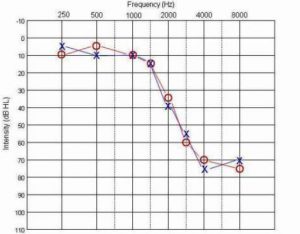
Hearing loss varies by degree and type, but high-frequency hearing loss is one of the most common. Hearing professionals define high-frequency hearing loss as hearing loss that occurs between 2000 Hertz (Hz) and 8000 Hertz. Decreased hearing in this range is often the first sign of hearing loss.

After you get a hearing test, your hearing professional will explain your test results using an audiogram. An audiogram is a graph that shows how well you hear at each frequency, which is important for speech understanding. The audiogram will show hearing within the range of normal, from 250 Hz to 1500 Hz, with results falling outside of the normal hearing range around 2000 Hz.
High-Frequency-hearing-loss.-1-300x234

Difficulty understanding speech
High-frequency hearing loss makes it challenging to understand speech in noise, and the voices of women and children, which are often higher in pitch than men. It can also be difficult to hear sounds like birds chirping, the doorbell ringing or voices over the telephone.

Frictive sounds like S, H and F are high in pitch, which is why high frequencies help with speech understanding. Tiny hair cells inside the cochlea process incoming sounds. High-frequency sounds are processed at the base of the cochlea, while low-frequency sounds are processed near the top. The hair cells at the base are more susceptible to damage, which is why hearing loss often affects high frequencies before low frequencies.

Noise, age, medications, and disease are all factors that can damage hair cells. Age-related hearing loss and noise induced hearing loss often affect the high frequencies first.

How hearing aids can help
Hearing aids are an effective treatment for high-frequency hearing loss. There are many different options available to help correct your hearing, such as open fit hearing aids and custom hearing aids with large vents that will maximize normal hearing in the low and mid-frequency ranges and amplify the high-frequency hearing affected by hearing loss. For more information, call Evolution Hearing in Charlottesville, VA at 434-260-8007 or our Raleigh, NC location at 919-670-3258, so we can help improve your quality of life.

Wednesday, 9 August 2017

Can treating hearing loss help prevent dementia?

A study conducted by The Lancet Commission on Dementia Prevention and Care noted that 50 million people have dementia worldwide – and that number is expected to triple by 2050. The need for dementia prevention and management is urgent, as dementia not only affects the person who has it, but it also impacts their family and friends.

Dementia-Hearing

The nine lifestyle factors
The Lancet Commission’s 24 international experts concluded that one in three cases of dementia could be prevented if people managed nine lifestyle factors – one of which is managing hearing loss during midlife (between age 40-65). The other eight include:
  • Increased childhood education
  • Regular exercise
  • Maintaining social engagements
  • Reducing or stopping smoking
  • Managing depression
  • Managing diabetes
  • Managing hypertension
  • Avoid obesity
Dementia typically doesn’t manifest itself with symptoms until age 65+, but the study’s authors say it likely begins between ages 40-65. If people can manage the above nine modifiable risk factors early on in life, it could great contribute to preventing or delaying dementia.

Dementia and hearing loss
Science isn’t yet certain why unmanaged hearing loss can increase the risk for dementia. But it has confirmed that hearing loss strains your brain, leading to social isolation and depression, and it accelerates brain atrophy.

Hearing loss is something you can manage with the help of hearing professionals. If you think you have hearing loss, take control and call Evolution Hearing in Charlottesville, VA at 434-260-8007 or our Raleigh, NC location at 919-670-3258 so we can help improve your quality of life.

Wednesday, 26 July 2017

Tips for Driving Safely with Hearing Loss


Does your hearing loss affect your ability to drive safely? Hearing loss, while often inconvenient and frustrating, can also be quite risky when you are behind the wheel of a car. You may be unable to hear someone honking or yelling at you to possibly get out of the way of danger. The sound cues we normally rely on while driving, such as horn honking or the ringing of a bicycle bell, become a lot harder to detect with hearing loss and they could even go unnoticed. We want to share some things that can help you to navigate the road safely if you’re hard of hearing.


Get your hearing treated. This is the best way to help you drive safely. If you haven’t had your hearing checked, but you believe you may suffer from hearing loss, don’t wait any longer to get it checked out. You may need hearing aids, which will greatly increase your hearing and safety on the road. If you already wear hearing aids, make sure you always wear them while operating a vehicle and continue to get regular hearing aid checkups.


Avoid distractions. Do not try to multitask while on the road. Put down the phone! It’s a widely known fact that texting and driving can lead to accidents, and trying to talk on the phone can be extremely distracting because you’re busy straining to hear what the person on the phone is saying. If you’re in a situation where you need to call someone or address a situation, pull over and deal with it before attempting to do so while driving.


Keep the music down. Not only does loud music damage your hearing, but it’s also a big distraction that makes it impossible to hear sound cues from the outside environment. Loud music can cause you to miss ambulance or police car sirens that are near by. These are noises you do not want to miss in case you need to move your car out of the way.


Pay attention visually. It’s always important to keep your eyes on the road, but if you suffer from hearing loss, it’s extra important because you need to use visual cues to make sense of your external environment. Pay close attention to traffic signals and always use your rearview mirror. Hearing loss makes it harder to pinpoint the relative distance of moving vehicles, so using your eyes carefully is important for protecting yourself and those around you.


If you believe you’re suffering from hearing loss please call Evolution Hearing at our Charlottesville, VA location, 434-260-8007 or at our Raleigh, NC location, 919-670-3258 to schedule an appointment today.

Wednesday, 28 June 2017

How to Make the Most Out of Hearing Care Follow-Up Appointments

After you’ve had your initial visit with your hearing care professional and you’ve been fitted with your hearing aid(s), it’s important that you keep up with your hearing care. Just like your overall health, your hearing health can benefit from routine maintenance. Routine visits are the perfect time to ask your audiologist questions or to have maintenance performed on your hearing aids to keep your quality of hearing at its best.


Here are some tips for getting the most out of your follow up visits:
  1. Be prepared to discuss your overall experience with your hearing aids. Are there specific things about them you like or don’t like? Were your expectations met or not? Have there been any situations or environments in which your hearing aids could work better for you? A good way to be fully prepared for this discussion is by keeping a detailed journal of your life with hearing aids so you can write down any concerns or questions as they arise. Things to note would be any new sounds you have heard since wearing your device or making note of environments or situations where your hearing aids work great or where they could work better.
  2. Thoroughly check the fit of your hearing aid. If there is a problem with the fit of your hearing aids, this will be the time to bring it up. Whether it’s a sore spot in your ear canal or maybe your hearing aids aren’t staying in place due to the wrong size tubing, your hearing care professional will be able to address these issues and fix them for you.
  3. Bring a third party to your appointment. Bringing a friend or family member with you can be very helpful. They can offer unique perspectives and additional insight or even take notes to help remind you of important information.
  4. Build a solid relationship with your audiologist. Your audiologist should be your biggest advocate in your journey to better hearing. It’s their job to help you maintain your hearing aids and answer any questions you have. They should also keep you updated on changing technology, provide advice and give you suggestions for aural rehabilitation. Your audiologist should be someone you can trust and continue to visit for follow-up appointments.
To schedule a follow-up appointment please call Evolution Hearing in Charlottesville, VA at 434-260-8007 or our Raleigh, NC location at 919-670-3258.

Wednesday, 5 April 2017

How to Maintain Your Hearing Aids

Keep it Safe
Hearing aids should be removed every night and stored in a cool, dry place when not in use. You may want to keep them out of the reach of pets or young children because they could present a choking hazard.


Keep it Clean
You may think you need to clean your hearing aids every night when you remove them, but it may be easier to clean them in the morning. Any debris or moisture, including earwax, is more likely to dry after a few hours and is a snap to wipe off with a soft cloth. Avoid using paper tissues because they can leave behind lint.


Keep it Dry
Even if your hearing aids are water resistant, they should not be submerged in water. Do not shower or bathe while using your hearing aids, and remove them before you go swimming as well. Any moisture that can seep into your assistive devices may corrode the interior mechanics. When you take care of your hearing aids, you can extend their life and enjoy the benefits they give you. If you have more questions about the proper maintenance of your hearing devices, call Evolution Hearing in Charlottesville at 434-260-8007.


Thursday, 16 March 2017

Do you suffer from tinnitus?


According to the American Tinnitus Association, tinnitus is the perception of sound when no actual external noise is present. It is commonly referred to as “ringing in the ears,” but it can actually manifest in a variety of sounds, including buzzing, hissing, whistling, swooshing and clicking.


Tinnitus can be both acute (temporary) or chronic (ongoing) affects over 50 million Americans – that is nearly 15% of the general public. If you are concerned that you suffer form this chronic condition, we want to help you find out and tell you how we can help.
Here is a list of questions to help you decide if you should see a hearing aid professional for a formal diagnosis.

Do you hear consistently hear a noise even when there is no external source for it?
If yes, would you describe the sound as a:
Ringing
– Buzzing
– Humming
– Hissing
– Whistling
– Swooshing
– Clicking
– Whining


Is the volume high enough to hear over other sounds around you?

Do you hear the noise constantly or intermittently?

Does the sound keep you up at night?

Have you heard the sound for at least three months?

Did you start hearing the noise after exposure to a loud event?

Did you start taking a new medication before you began to notice the noise in your ears?

Do you have a problem with significant wax buildup in your ears?

Have you been diagnosed with any of the following?

Meniere’s disease
– Temporomandibular joint disorder (TMD or TMJ)
Hearing loss
– Psychological disorder (Anxiety, Depression, Chronic Stress)
– Concussion or other brain injury


Are you avoiding activities and situations you used to enjoy?
If you answered “yes” to one or more of these questions, you could have tinnitus. There is no complete cure, but there are many effective treatment options to alleviate discomfort.

What to do next

To learn more about the cause and treatment for your tinnitus, please call Evolution Hearing in Charlottesville, VA at 434-260-8007 or our Raleigh, NC location at 919-670-3258.